I can't count how many times a patient has sat in my chair, pointed at their crowded front teeth, and said some version of, "I already know I'm not a candidate for Invisalign. My teeth are too messed up." Usually, someone told them that years ago: another dentist, an orthodontist, sometimes just a well-meaning friend. Most of the time, they're wrong.
I understand where the assumption comes from. For a long time, clear aligners had a reputation for handling only the easy cases, like a small gap here or a slightly rotated tooth there. But that's not been my experience treating patients here in Dearborn for years now. The cases people assume are too complicated are often the ones I'm most confident about.
Bottom line: Don't assume your smile is too far-gone for Invisalign until you have a consultation with a provider.
Candidacy Explained
When patients worry they're not eligible for Invisalign, it's almost always because of one of three things: crowding, teeth that are rotated or tipped, or a bite that doesn't quite line up. On their own, none of those automatically disqualify someone. What actually determines candidacy is whether the movements your teeth need can be predictably achieved with aligners. That's a question I can usually answer with the right tools, not a guess.
Invisalign has changed dramatically over the years. Better treatment planning software, smarter attachment design, and more precise aligner staging allow us to treat many cases today that once required braces. That’s one reason an opinion you received five or ten years ago may no longer apply.
How Attachments Work
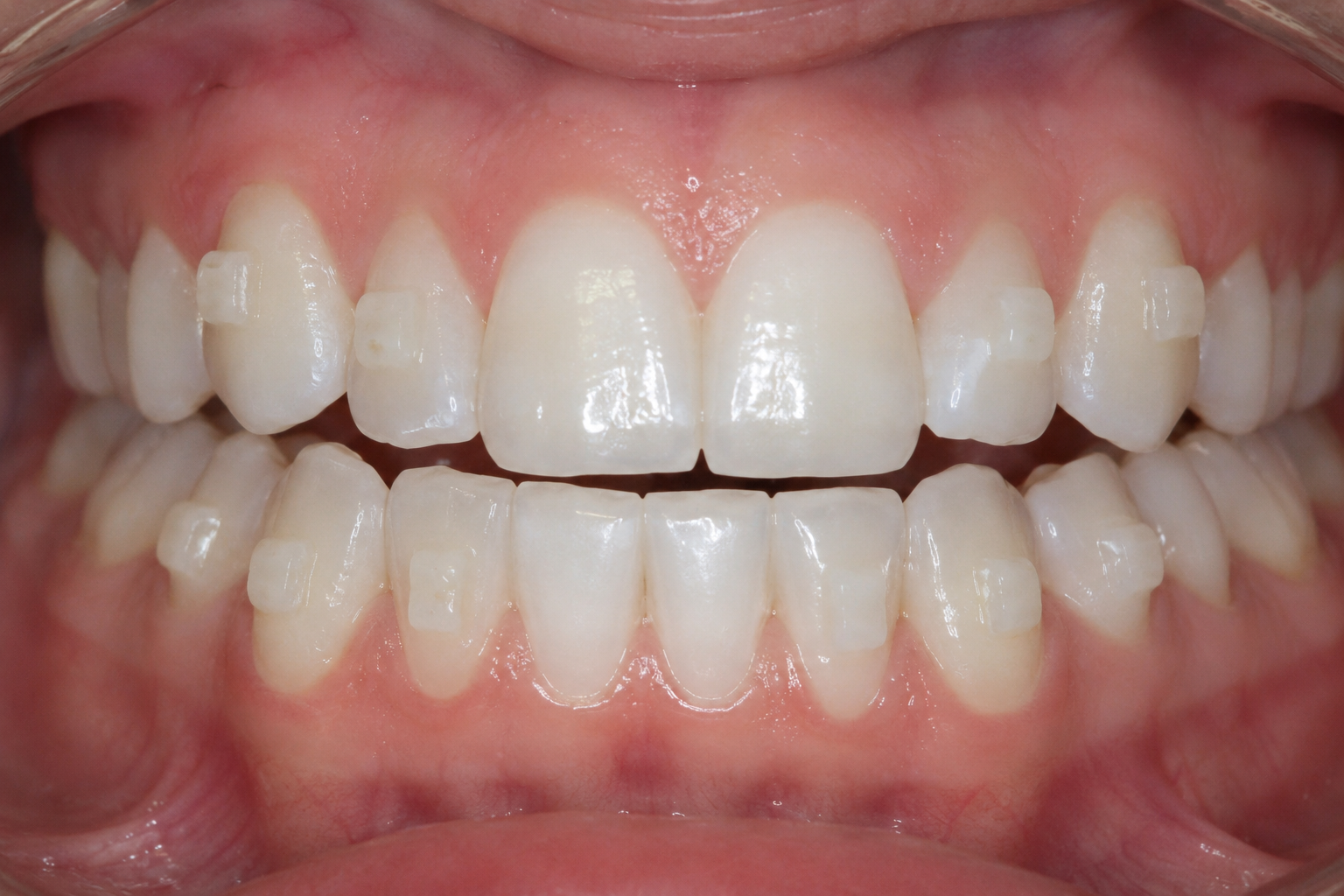 This is where Invisalign attachments come in, and honestly, they're the reason I can say yes to patients more often than I used to.
Attachments are small, tooth-colored bumps we bond directly onto specific teeth. They're not visible unless someone is looking closely, and I remove them painlessly once treatment is done. What they do is give the aligner something to grip, so it can apply rotational or tipping force that a smooth aligner alone can't manage.
In practice, that means:
Here's a way to think about it that helps a lot of my patients. A smooth aligner can nudge teeth, but it has nothing to hold onto for the trickier movements. Attachments change that. Once I bond those small bumps to the right teeth, your aligner can push, rotate, and pull similar to the way a bracket-and-wire system does. In other words, attachments let your aligners borrow a little bit of the mechanics that make braces so effective on complicated cases.
The advantage of attachments is everything you don't give up. Unlike braces, the whole system still comes out whenever you need it to. You take the aligners off to brush and floss normally, and you eat whatever you want, so there is no avoiding popcorn, apples, or steak for a year. You get braces-like control during the day and your normal life at every meal.
That combination is exactly why I can say yes to cases I once would have referred out.
I don't add attachments by default, and I don't skip them to make a case sound simpler than it is. During your consultation, I take digital impressions and build out a projected model of how your teeth will move, appointment by appointment. That model tells us, not guesses, which teeth need extra grip to get where they're going. Some patients need attachments on two teeth. Others need them on most of their upper arch. Others are simply going to be better off with traditional braces. It depends entirely on your mouth, not on a general rule.
Being Honest About Limits
I'd be doing you a disservice if I said Invisalign and attachments solve everything, because they don't. If someone's bite issue is severe, the kind that affects how the jaw itself is positioned and not just individual teeth, I'll tell them honestly that they may be better served by an orthodontist. I'd rather send a patient down the right path than keep them in a treatment that won't get them the result they came in for.
That honesty matters to me more than closing a case.
Stepping back
Listen to me explain how Invisalign compares to traditional metal braces.
What To Expect
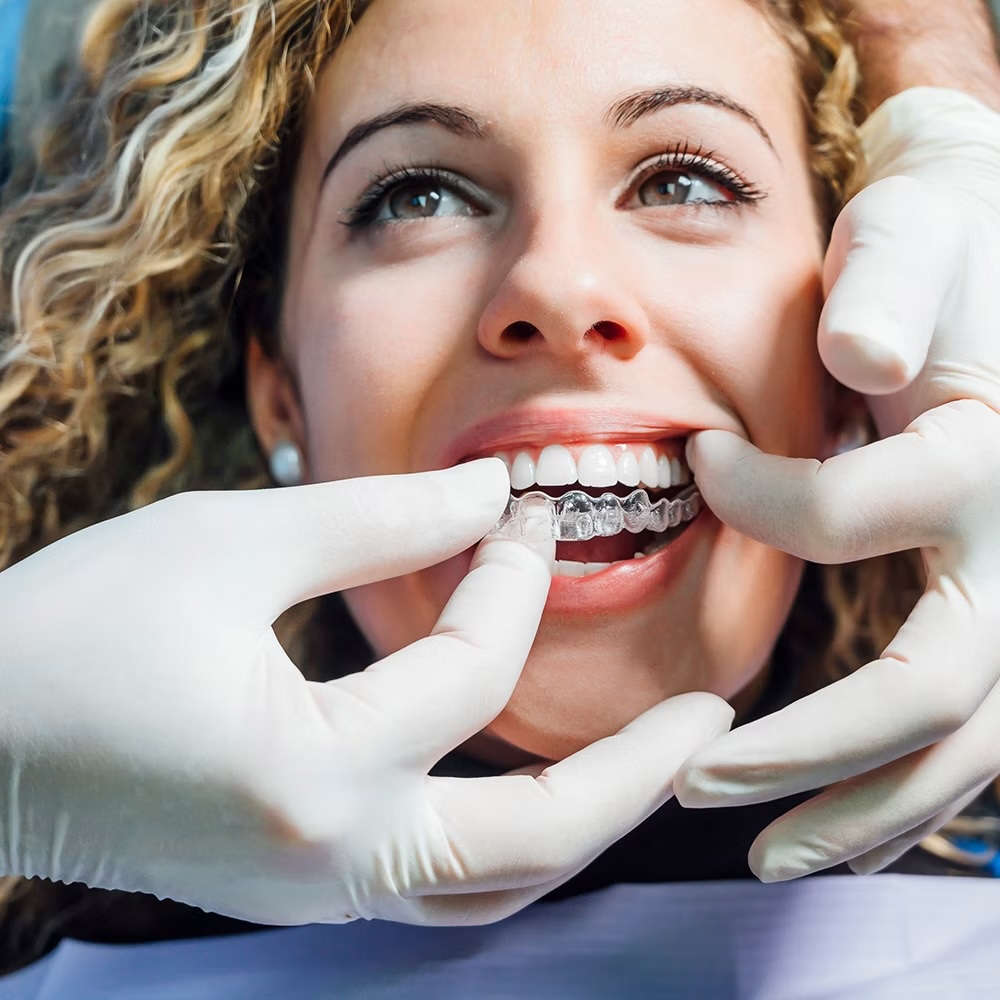 The first visit is a real exam, not a sales pitch. I look at your bite, your crowding, and the way individual teeth are rotated, then take digital impressions instead of old-fashioned molds. That digital scan becomes a stage-by-stage plan showing how your teeth will move over the course of treatment, and it's where we decide together whether attachments make sense for you.
If attachments are part of your plan, placing them takes just a few extra minutes at your fitting appointment. There's no discomfort involved, and most patients forget they're there within a day or two.
From that point, it's mostly about consistency. Aligners work best when worn 20 to 22 hours a day, and you'll come back every four to six weeks so I can check your progress and send you home with your next set. When treatment wraps up, I remove any attachments in a single visit, and your teeth are left exactly as they should be, no marks, no residue.
If you've been carrying around an old opinion about your smile (it's too crowded, too rotated, or too complicated), I'd genuinely like the chance to provide my two cents. A consultation costs you nothing but a little time, and digital impressions will tell us far more than a quick glance ever could.
Let's find out together. No pressure, just an honest look at your smile.
“It’s rare to find a dentist’s office these days that feels so patient-focused, caring, and up-to-date. Many offices in this area can feel rushed, impersonal, or outdated, but here you feel valued and cared for. I can honestly say I’ve finally found a dental office I can grow with, and I couldn’t recommend Dearborn Family Dentistry more!”
— Consuelo, 5-Star Review